The difference between good veneers and great ones
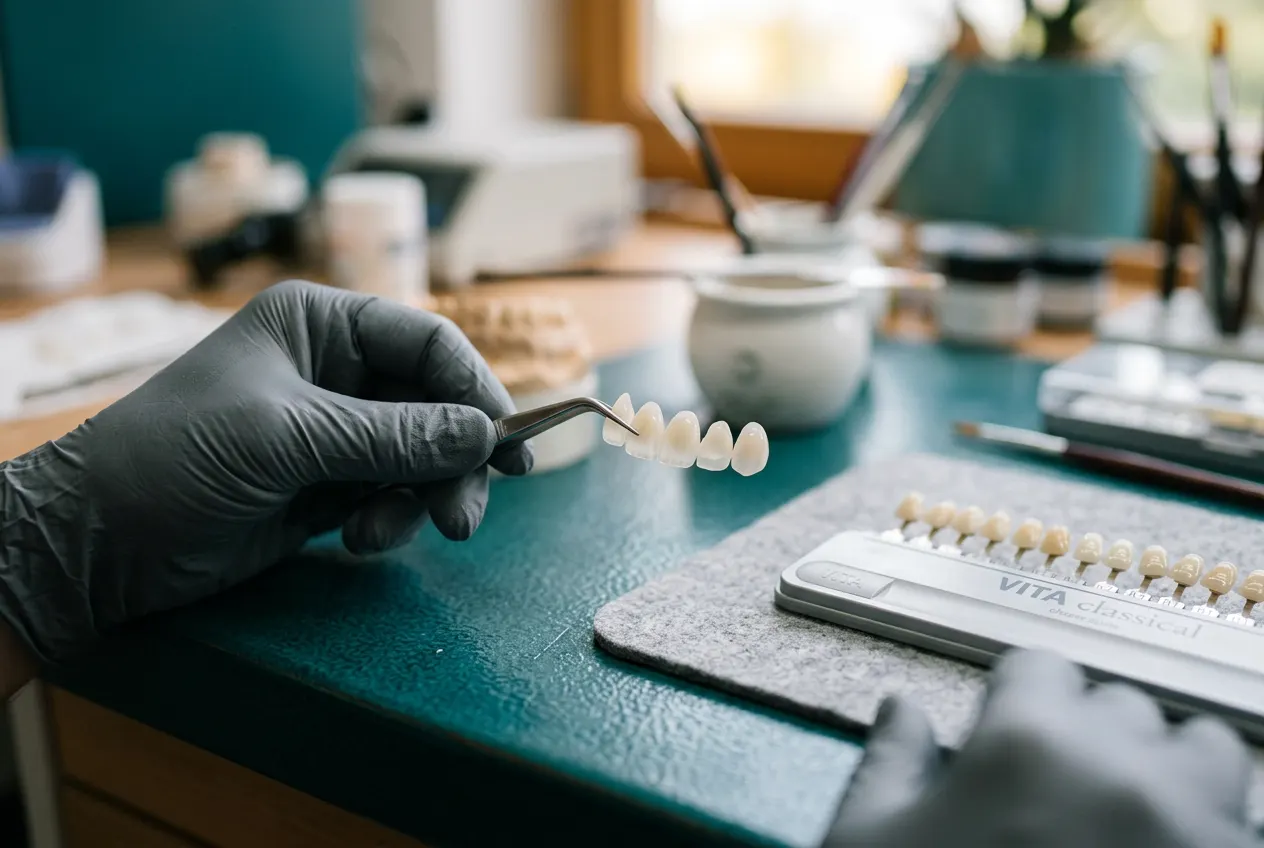
Great veneers are not uniformly white rectangles. They have subtle translucency at the edges, natural surface texture, and proportions that match your lips and face. Dr. Khoshsar’s training in fixed prosthodontics shapes how he designs tooth length, width, and bite so veneers look beautiful and function properly.
We partner with master ceramists and review shade in multiple lighting conditions so your smile looks natural at the office, outdoors, and in photos.
Veneers vs. bonding vs. crowns
Composite bonding is a quicker, lower-cost option for small chips but stains and wears sooner. Crowns cover the entire tooth and are best when a tooth is heavily filled or cracked. Veneers sit in between: a durable, highly aesthetic upgrade for otherwise healthy teeth.
What to expect, step by step
- 1
Smile design consult
Photos, scans, and a conversation about your goals, face shape, and lifestyle.
- 2
Trial smile
A temporary mock-up lets you test-drive the size, shape, and shade.
- 3
Gentle preparation
A fraction of a millimeter of enamel is refined, and temporary veneers protect your teeth.
- 4
Bonding day
Your final porcelain is tried in, color-checked in natural light, and permanently bonded.
Watch: Porcelain Veneers explained
Are you a good candidate?
- Chipped, worn, or uneven teeth
- Stains that whitening cannot lift
- Small gaps or mildly crooked teeth
- Teeth that look too short or small
Cost, insurance & financing
Veneers are priced per tooth and depend on the number of teeth and material. Most cases involve 6 to 10 upper teeth. Financing makes a full smile makeover manageable monthly.
See insurance & financing options