Restorative Dentistry · 6 min read
Traditional Dentures vs. Implant-Supported Dentures: An Honest Comparison
Dentures are still a great option for many people. Here is when a few implants make a dramatic difference.

Medically reviewed by Dr. Ramin Khoshsar, DDS, DMD

Modern dentures look far more natural than they did a generation ago. Still, many wearers struggle with slipping, sore spots and adhesives. Understanding the difference between conventional and implant-supported dentures helps you choose the right fit for your budget and lifestyle.
Traditional dentures
A conventional denture rests on your gums and is held by suction, especially on the upper arch. It is the fastest and most affordable way to restore a full smile. The downside is that, without tooth roots, the jawbone gradually shrinks, so dentures need to be relined or remade every few years.
Implant-supported (snap-on) dentures
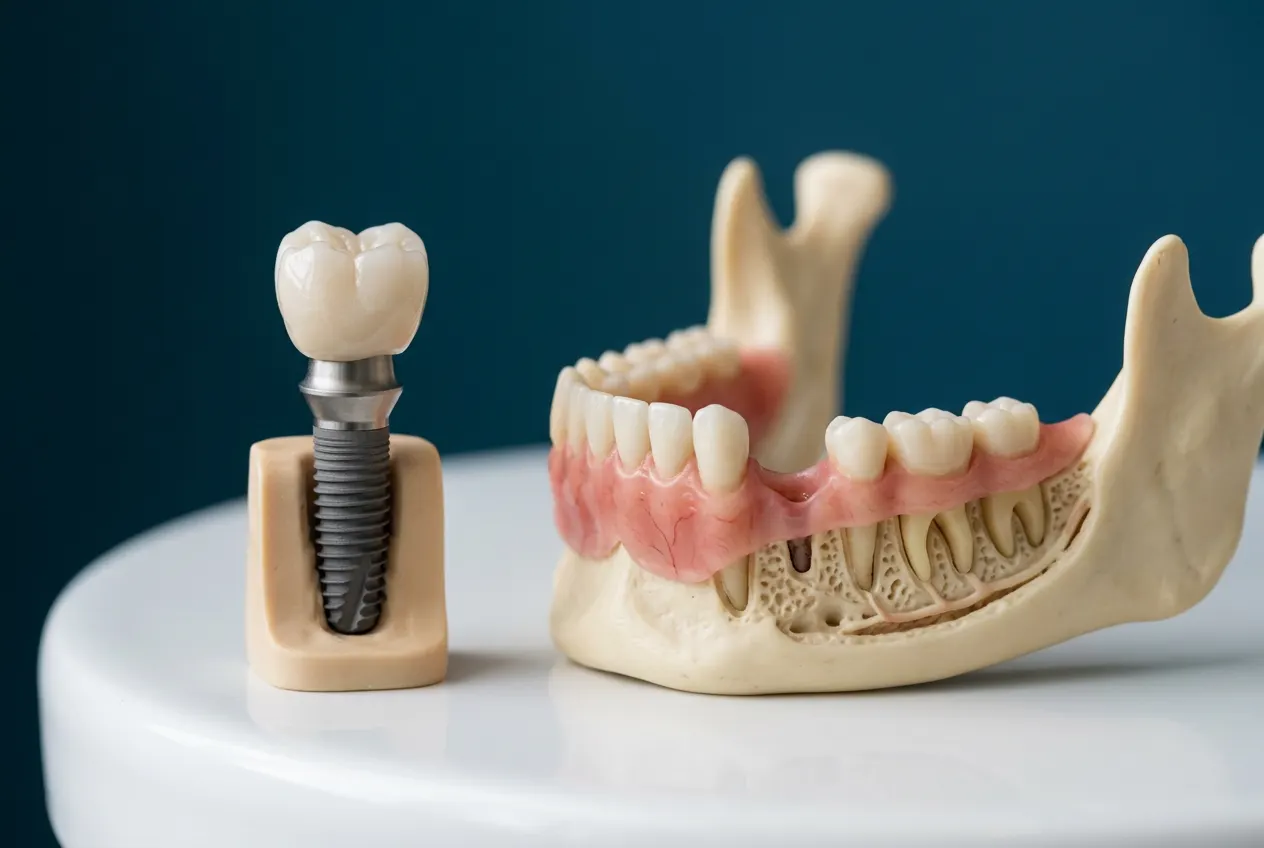
With two to four implants, a denture can snap securely into place. Benefits include:
- No more adhesives or slipping while talking and eating
- A smaller upper denture that does not cover the palate
- Stronger bite force for a more varied diet
- Stimulation that helps preserve jawbone
Which option is right for you?
If budget is the priority, a well-made traditional denture is a great start, and implants can often be added later. If stability matters most, implant-supported dentures or a fixed All-on-4® bridge deliver the biggest quality-of-life upgrade. A consultation with a 3D scan will show which options your bone can support.
This article is for general education and is not a substitute for an in-person exam. Pricing ranges are estimates; your exact fee depends on your diagnosis.